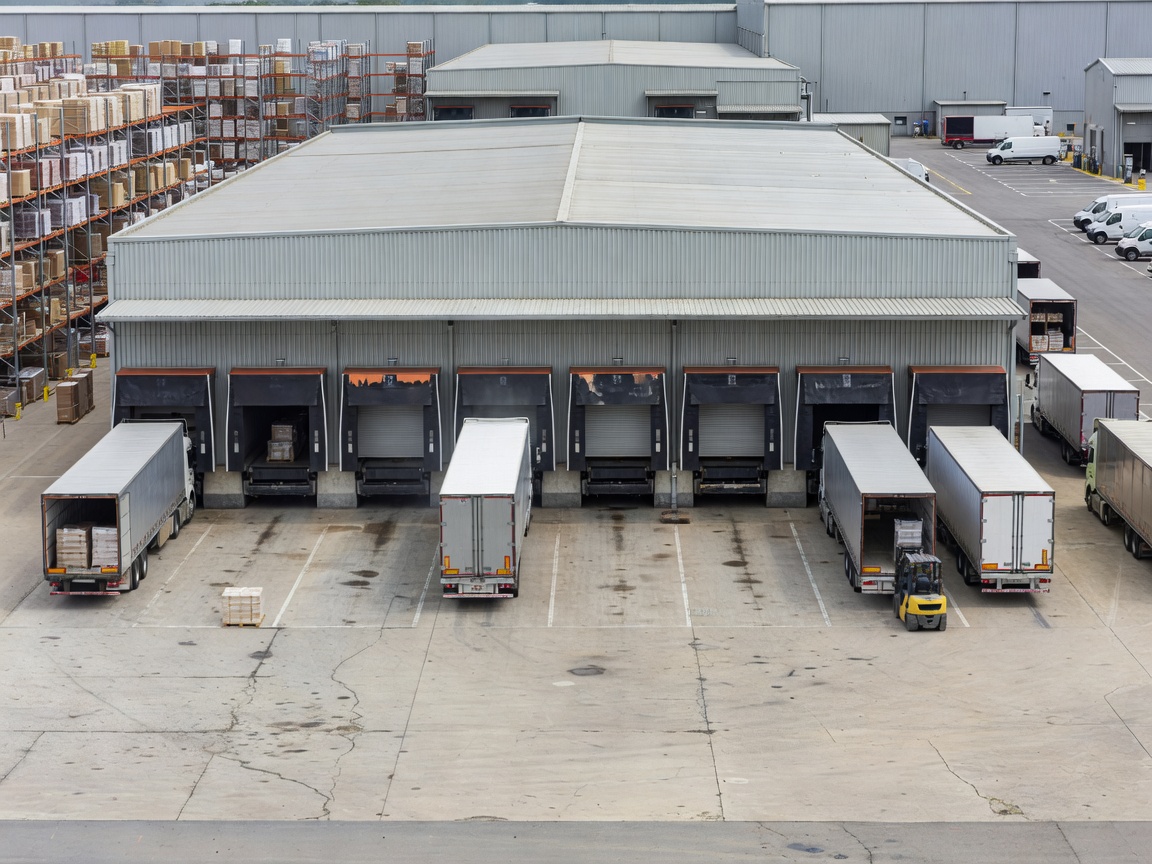
Location follows the work.
A warehouse strategy defines what each facility does. A site can receive inbound goods, store reserve stock, process orders, consolidate regional loads, cross-dock transfers, manage returns or support a specific product condition. Location matters, but role comes first. A well-located building with the wrong process role still creates avoidable movement.
Begin with regional demand. Map order frequency, product mix, delivery windows and receiving constraints by market area. Then map inbound origins and transport connections. A site near customer demand may suit final distribution. A site near an import gateway or supplier corridor may better suit inbound consolidation. One facility may perform both roles if flows and capacity allow.
Central versus distributed facilities.
Fewer centralized facilities can simplify governance, systems, stock control and inbound receipt. They can also make long outbound legs routine and concentrate operational exposure. A distributed network brings stock and dispatch activity nearer to regional demand. It can improve local response options while increasing duplicate processes, transfer flows and inventory fragmentation.
The choice is rarely binary. A central distribution centre supported by regional cross-docks, specialist storage sites or overflow locations can create a workable hybrid. The test is whether each site has a clear flow purpose and whether the handovers are controlled.
Capacity is more than square metres.
Assess storage profile, throughput, dock activity, labour availability, handling equipment, operational hours and peak flexibility. A building can have unused space but lack the process capacity to receive and dispatch at the required rhythm. Separate average demand from peak demand. Identify where congestion can form: inbound staging, put-away, picking, marshalling or carrier collection.
Transport connections and service coverage.
Review practical access to road corridors, terminals, ports, rail links and carrier networks. Consider customer delivery geography alongside inbound reach. Do not assume a central point on a map is operationally central. Actual travel patterns, cut-off times, route restrictions and handover points matter.
Advantages, limits and risk.
Regional warehouses can improve proximity and create contingency options. They require tighter stock allocation, process consistency and management across sites. Central facilities consolidate expertise and stock. They may become a single point of operational dependency. Leased capacity can add flexibility, but its service scope, data visibility and exit conditions require careful review.
Planning checklist.
- Define every proposed facility role.
- Map inbound, storage, outbound and return flows.
- Measure capacity by process stage, not area alone.
- Compare central, regional and hybrid structures.
- Identify facility failure and overflow options.
- Review the design against future demand regions.
Warehouse selection, contracts and local operating requirements need location-specific due diligence. This guide does not replace property, legal, safety, customs or operational advice.