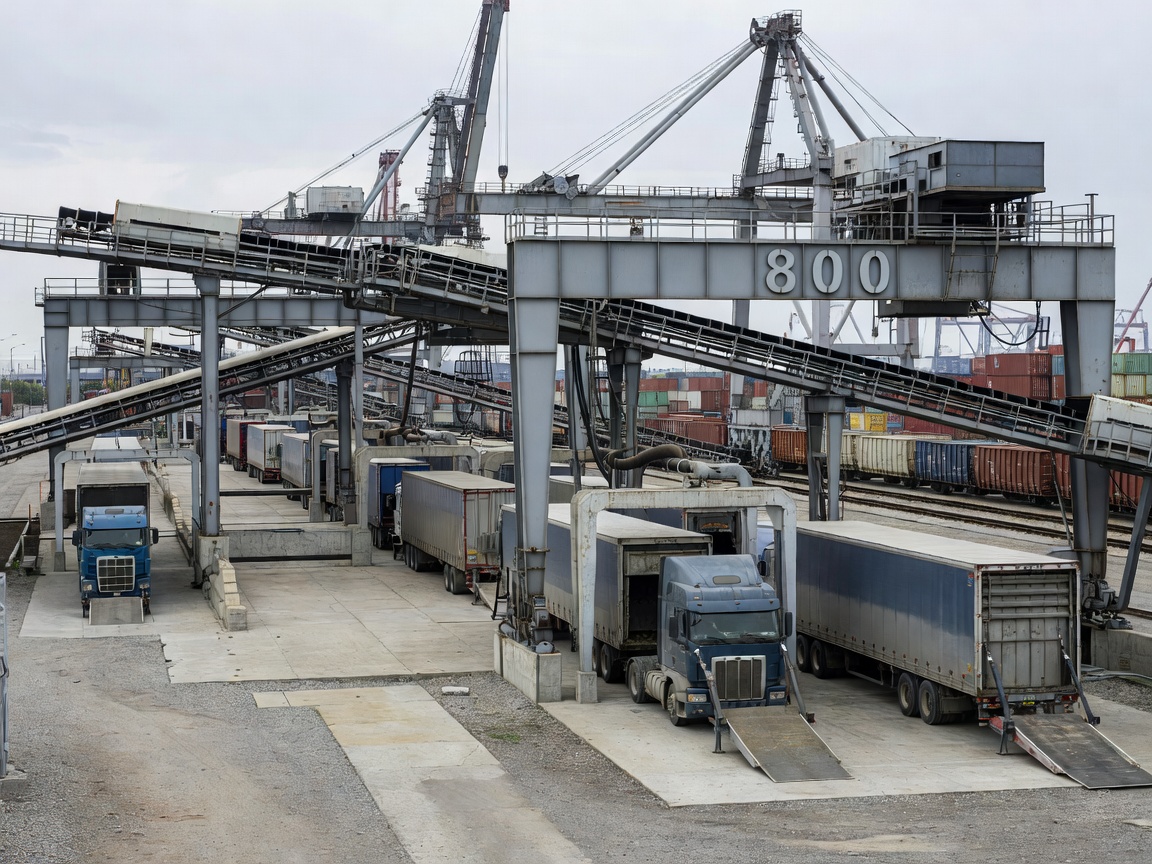
Start with the physical operating model.
A distribution network is the relationship between supply points, storage locations, transport corridors and customer demand. The plan decides where goods enter, where they wait, which facilities process them and how far each delivery zone extends. It is not a warehouse selection exercise alone.
Map customer geography first. Separate stable demand from irregular demand. Identify dense delivery areas, remote zones and regions with different service expectations. Then map supply origins, inbound modes and handling constraints. A network can only be judged against the flows it must support.
Compare structure, not labels.
A centralized model concentrates stock and control in one primary facility. It can simplify inventory visibility, inbound receiving and operational governance. It may also increase average outbound distance and create more exposure to one location. A regional model places stock closer to demand through several facilities. It can shorten local transport legs, but adds transfer activity, inventory balancing and site coordination.
Hub-and-spoke structures sit between those choices. One or more hubs consolidate inbound goods and feed regional spokes, cross-docks or delivery points. The useful question is not whether a model is modern. It is whether it matches order patterns, product characteristics, service windows and management capacity.
Key variables to hold constant.
- Customer locations and delivery-zone definitions.
- Supplier origins, inbound frequency and receiving requirements.
- Product dimensions, handling needs and storage conditions.
- Required order cut-offs and acceptable delivery windows.
- Facility capacity, labour model and expansion options.
- Transport distance, corridor availability and modal fit.
Use scenarios before commitment.
Build at least a base case and alternative network shapes. Keep the demand assumptions visible. Test what changes when a major region grows, an inbound source moves, a facility becomes constrained or a delivery zone requires faster response. This does not produce a permanent answer. It produces a traceable operating decision.
Cost needs to be viewed as a connected set: facility fixed cost, handling, transfer movements, linehaul, final delivery, stockholding and management overhead. Lower transport distance can be offset by duplicate stock. Fewer sites can reduce complexity while increasing exposure to a long outbound leg. The trade-off is operational, not purely financial.
Advantages and limits.
Centralization often offers tighter stock control and fewer process variations. Its limit is concentration. Regionalization improves local reach and can separate different demand profiles. Its limit is coordination. Hub-and-spoke design can consolidate flows while preserving regional coverage. Its limit is dependency on transfer timing and hub continuity.
Planning checklist.
- Define demand regions and service rules.
- Map inbound origins and product flows.
- List viable facility roles, not just facility addresses.
- Compare centralized, regional and hybrid structures.
- Test capacity, disruption and growth scenarios.
- Assign decision owners and review triggers.
This guide is general planning information. A site-specific distribution decision requires current commercial, facility, transport and regulatory inputs for the relevant goods and countries.